Early neurological development plays a central role in how a child communicates, learns, behaves, and interacts with the world. During the first few years of life, the brain undergoes rapid growth, forming neural connections that influence speech, hearing, movement, attention, and emotional regulation. Any disruption in this process can affect a child’s overall development.
As noted by Dr Richa Child Neuro, many neurological concerns begin subtly and may not appear serious at first. However, early recognition and timely medical guidance can significantly improve developmental outcomes.
Understanding Brain Development in Early Childhood
From birth to the age of five, the brain develops faster than at any other stage of life. Neural pathways strengthen through daily experiences such as talking, listening, playing, and movement. These pathways are responsible for how children understand language, control their bodies, and respond to social environments.
When neurological development is delayed, these connections may not form as expected, leading to challenges in one or more developmental areas.
Developmental Milestones and Why They Matter
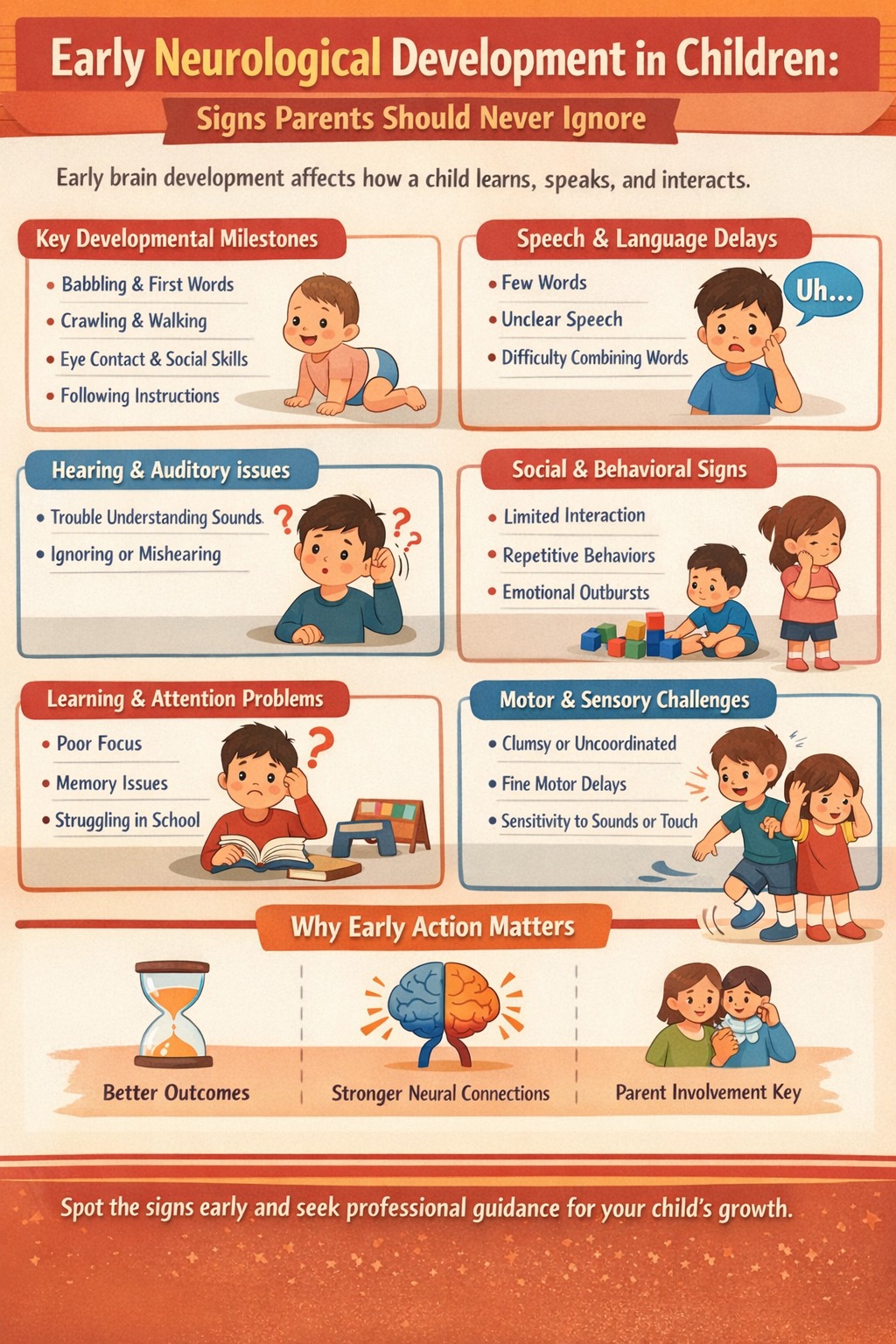
Developmental milestones serve as indicators of neurological health. These include:
- Babbling and early speech
- Sitting, crawling, and walking
- Eye contact and social engagement
- Attention and response to instructions
Missing or delayed milestones do not always indicate a serious condition, but they do signal the need for closer observation and possible neurological evaluation.
Speech and Language Development Concerns
Speech development depends on coordination between the brain, hearing, and motor control of speech muscles. Children with neurological delays may:
- Speak fewer words than expected
- Have difficulty combining words
- Show unclear or inconsistent speech patterns
Once medical causes are evaluated, children emphasize benefit from speech therapy in Delhi, which supports language development and improves communication skills through structured intervention.
Hearing and Auditory Processing in Brain Development
Hearing is an essential part of learning and communication. While some children can detect sounds, they may struggle with processing and understanding speech. This can affect language development and classroom learning.
Neurological involvement of auditory pathways may require advanced hearing evaluation. In selected cases, referral for a cochlear implant in Delhi becomes part of a long-term hearing rehabilitation plan guided by medical specialists.
Social, Emotional, and Behavioral Development
Neurological development also influences how children interact socially and regulate emotions. Parents may notice:
- Limited social interest
- Difficulty understanding emotions
- Repetitive behaviors
- Resistance to change
Early identification of these patterns allows referral to a structured center for autism in Delhi, where children receive targeted support for social communication and behavior development.
Learning, Memory, and Attention Difficulties
As children enter school, neurological concerns may become more noticeable through learning challenges. These may include difficulty concentrating, slow information processing, or poor memory retention.
A detailed psychological assessment in Delhi helps evaluate cognitive abilities and provides insights that guide both therapy planning and educational support.
Motor Development and Sensory Processing
Motor skills develop as the brain coordinates muscles and movement. Some children experience:
- Poor balance or coordination
- Difficulty with fine motor tasks
- Sensory sensitivities
- Delays in daily functional activities
Support from an occupational therapist in Delhi helps improve motor planning, sensory integration, and independence in daily routines.
Importance of Early Diagnosis and Intervention
Early diagnosis allows interventions to begin when the brain is most adaptable. Therapy during early childhood helps strengthen neural connections and prevents secondary challenges such as frustration, low confidence, or academic difficulties.
Children who receive early support often show better progress in communication, learning, and social skills compared to those who receive delayed intervention.
Role of Parents in Neurological Development
Parents play a crucial role in supporting brain development. Simple daily activities such as talking, reading, playing, and encouraging movement strengthen neural pathways. Observing developmental changes and seeking guidance when concerns arise can make a significant difference.
Parental involvement also improves the effectiveness of therapy and medical care.
Therapy Support Alongside Neurological Care
Medical evaluation identifies the concern, while therapy supports functional improvement. A coordinated approach between medical professionals and therapists ensures that interventions align with the child’s neurological needs.
For families seeking structured developmental therapy, Listening Ears provides multidisciplinary support designed for children with neurological and developmental challenges. Their services are aligned with medical recommendations and focus on long-term developmental progress.
Listening Ears offers services including speech and language intervention, hearing rehabilitation, autism-focused programs, cognitive evaluation, and occupational therapy—helping children build essential skills under guided care.
Final Guidance for Parents
Early neurological signs should never be ignored. With timely medical evaluation, structured therapy, and active parental involvement, many children show meaningful improvement. Early support creates stronger foundations for learning, communication, and independence throughout life.
AQs (Easy to Understand)
- What is early neurological development in children?
Early neurological development refers to how a child’s brain grows and forms connections that control speech, movement, learning, behavior, and emotions. This development is fastest in the first five years of life and shapes future abilities. - What are early warning signs parents should not ignore?
Signs include delayed speech, poor eye contact, difficulty walking or sitting, limited social interaction, frequent tantrums, or lack of response to name. These signs suggest the brain may need extra support. - Can neurological delays affect speech and learning?
Yes. Brain development directly impacts speech, attention, memory, and learning skills. Delays can make communication and school learning harder without early therapy. - Does hearing play a role in neurological development?
Hearing is closely linked to brain development. Even mild hearing processing issues can affect speech and learning, which is why hearing evaluation is important in developmental concerns. - When should parents consult a specialist?
Parents should seek medical advice if milestones are delayed, progress is slow, or behavior seems unusual. Early consultation helps prevent future learning and communication difficulties. - How does early intervention help the brain?
Early therapy strengthens brain connections when the brain is most flexible. This improves speech, movement, behavior, and social skills more effectively than late intervention. - What role do parents play in brain development?
Parents support brain growth through talking, reading, playing, and observing changes. Active involvement also improves therapy outcomes and long-term progress. - How does therapy support neurological development?
Therapy translates medical diagnosis into daily functional improvement. Services like speech, occupational therapy, and behavioral support help children build skills needed for independence and learning.